Gotion High-Tech: The ultimate choice for "Bankable"
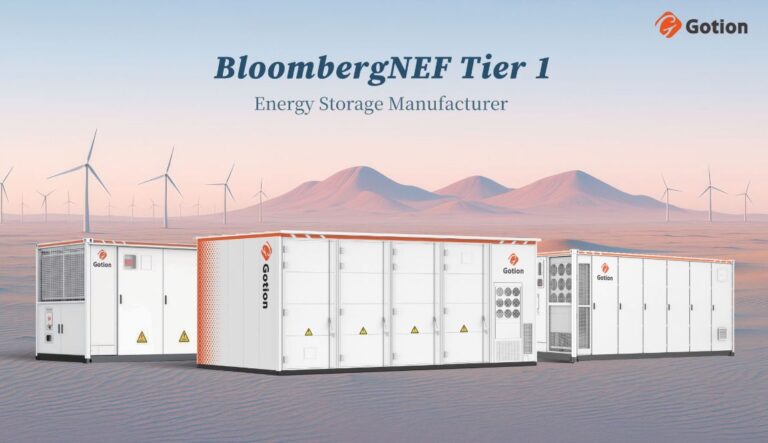
Gotion High-Tech: The benchmark for global project bankability
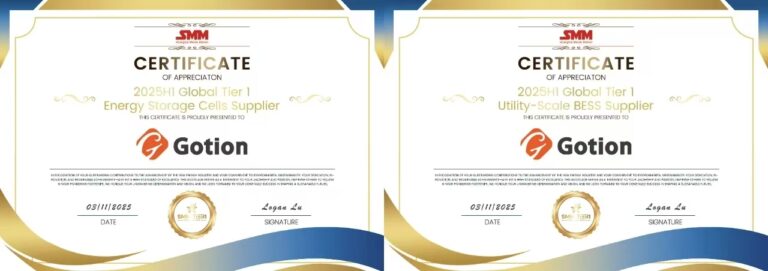
Gotion High-Tech has been consistently placed on the Tier 1 list by BloombergNEF (BNEF) since 2024 and is reassessed quarterly. Furthermore, it has maintained its leading position on the SMM list from 2023 to the present. This continuous, dual Tier 1 distinction over several years is the strongest evidence of Gotion’s long-term reliability. Choosing Gotion means partnering with a company that has successfully passed the most stringent financial scrutiny in the global market, ensuring that your project is Bankable by any bank worldwide.
This distinction is not about simple laboratory tests; it is proof of quality in practice, which is essential for securing your project’s financing on a global scale.
Why the Tier 1 distinction guarantees your investment
The BNEF methodology is the most rigorous in the industry, with the sole purpose of assessing whether banks and international investors trust a company’s equipment.
By choosing Gotion High-Tech, you secure:
1. Global bankability & continuous vetting
BNEF verifies whether large international banks have financed major Energy Storage System (BESS) projects utilizing Gotion’s equipment.
Gotion is reassessed quarterly by BNEF, ensuring continuous compliance with the highest market standards.
Essentially, the Tier 1 ranking certifies that our products are accepted by financiers globally, drastically reducing your project’s financing risk.
2. Certification of real-world projects & performance
To achieve Tier 1 status, Gotion must have supplied products to at least six (6) large commercial projects (exceeding 10 MW or 10 MWh) over a two-year period, with independent clients.
This means the distinction is based on the proven, continuous performance of our products under real-world, commercial operating conditions, not on advertising claims.
3. Guarantee of corporate stability
BNEF certifies that Gotion High-Tech is a company with strong financial stability and own manufacturing plants.
This provides you with the maximum security that the company will be here to support your system’s long-term warranty and ongoing operation and maintenance needs.
The real meaning of Tier 1: Financial Health
BNEF Tier 1 classification: the foundation of bankability
The Tier 1 classification system was developed by Bloomberg New Energy Finance (BNEF) and the Shanghai Metals Market (SMM). It assesses the bankability of the manufacturer based on their corporate financial health.
This evaluation focuses on the company’s ability to:
Secure debt financing.
Maintain long-term operational success.
Financial stability is vital for investors, as it indicates that the manufacturer can honor warranties for the lifespan of the batteries (typically 10–15 years), sustain operations, and provide support for your system.
Key Components of bankability in BESS systems
Bankability in energy storage systems depends on critical factors:
Financial stability and reputation: The primary focus of the Tier 1 list is on the manufacturer’s financial stability. Companies that consistently demonstrate strong performance and the ability to secure large projects are more likely to be Tier 1.
Quality and reliability: Although the Tier 1 designation does not directly reflect quality, the financial health of a company often correlates with its ability to produce high-quality, reliable products (e.g., LFP batteries).
Performance guarantees: Performance guarantees and comprehensive warranties are critical. These assure that BESS systems will maintain a certain percentage of their rated capacity (e.g., 85% State of Health – SOH) for a defined period.
Third-Party certifications: Independent certifications from recognized organizations like IEC, UL, and TÜV provide additional validation of quality and safety, which is often a prerequisite for securing financing from banks.
Technological Innovation: Innovations (such as liquid cooling, high energy density) and advancements in solid-state batteries enhance Bankability, leading to higher efficiency and reduced operating costs.